
Footfall Marketing Is Not Luck—It’s Strategy
For years, businesses have blamed low footfall on “slow seasons,” market conditions, or changing consumer behavior. But the truth is simpler—and more uncomfortable: footfall doesn’t happen by chance anymore.
In today’s market, foot traffic doesn’t increase just because a business exists—it grows when people are guided, motivated, and convinced to visit. With customer decisions now starting online, attracting walk-ins requires more than visibility; it requires intent-driven execution.
Here are five practical, proven ways businesses can attract more foot traffic—strategies that work across retail, hospitality, healthcare, education, and service-based industries.
1. Win Local Search Before You Win the Walk-In
Most foot traffic starts with a local search. When people look for businesses “near me,” they already have visiting intent.
Execution checklist:
-
Optimize your Google Business Profile
-
Use accurate address, timings, and categories
-
Add real images, videos, and weekly updates
-
Encourage and respond to customer reviews
-
Use location-based keywords across your website
Why it works:
You meet customers at the moment they’re ready to step out—not just browsing.
2. Use Paid Ads with Location & Time Precision
Generic ads create awareness. Location-focused ads create visits.
Execution checklist:
-
Run radius-based Google and social ads
-
Target peak hours, weekends, or slow business days
-
Highlight visit-worthy reasons (offers, experience, urgency)
-
Retarget users who engaged but didn’t visit
Why it works:
You’re not advertising to everyone—you’re advertising to people who can realistically walk in.
3. Turn Social Media into a Discovery Tool, Not Just a Posting Platform
People don’t visit what they don’t recognize. Social media builds familiarity before the visit.
Execution checklist:
-
Show real experiences, not stock visuals
-
Use short videos (Reels, Shorts) showcasing in-store moments
-
Tag location consistently
-
Promote events, limited-time offers, or new arrivals
-
Collaborate with local creators or influencers
Why it works:
When customers recognize your space online, visiting feels like a natural next step.
4. Create Content That Answers “Why Should I Visit?”
Content shouldn’t just inform—it should push action.
Execution checklist:
-
Write blogs answering local customer questions
-
Create landing pages focused on in-store experiences
-
Highlight benefits of visiting over ordering online
-
Add clear visit-driven CTAs (Book, Visit Today, Walk In)
Why it works:
People need a reason to step out. Good content removes hesitation and builds confidence.
5. Track What Converts Online Interest into Offline Visits
Many businesses track clicks—but ignore visits. Foot traffic improves when decisions are data-led.
Execution checklist:
-
Track calls, direction requests, and store visits
-
Analyze which ads and keywords drive physical actions
-
Identify peak-performing time slots
-
Refine campaigns based on footfall behavior, not vanity metrics
Why it works:
What gets measured gets improved—and foot traffic is no exception.
How Edifybind Transformed Declining Footfall into Growth
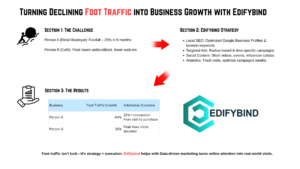
Edifybind helped Person A’s boutique and Person B’s café reverse declining footfall using local SEO, targeted ads, social content, and analytics. Within months, walk-ins and conversions increased significantly, proving strategy drives results.
Common Mistakes That Kill Foot Traffic
Even with effort, businesses often struggle due to:
-
Ignoring local intent
-
Running digital campaigns without offline goals
-
Posting content without visit-based CTAs
-
Treating branding and performance as separate efforts
-
Expecting instant results instead of consistency
Foot traffic grows when strategy and execution align.
Key Takeaways:
Attracting foot traffic isn’t about luck, discounts, or random promotions. It’s about:
-
Being visible where decisions start
-
Creating trust before the visit
-
Executing campaigns with intent
-
Optimizing continuously based on real behavior
How Edifybind Helps
Because attracting walk-ins isn’t guesswork—it’s a process.